Blog

Economic Impact & Community Benefits: The Rigging Industry as an Engine of Growth
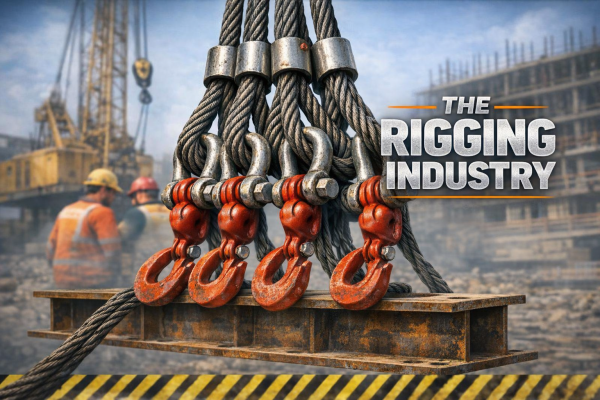
The rigging industry is an essential component of American infrastructure, providing the backbone for heavy lifting in construction, manufacturing, and major infrastructure projects. It is often overlooked in broader economic discussions, but without rigging professionals and their expertise, vital projects such as bridges, skyscrapers, power plants, and transportation hubs would not come to life. Beyond its technical function, the rigging sector plays a crucial role in strengthening local economies across the United States, fostering job creation, investing in communities, and ensuring the stability of the country’s manufacturing and construction industries.
Fueling Job Creation
The rigging industry provides thousands of well-paying jobs, supporting a diverse range of skill levels from entry-level workers to seasoned rigging specialists. These positions often come with competitive wages, benefits, and opportunities for career advancement. The demand for rigging professionals spans multiple industries, including energy, aerospace, shipbuilding, and logistics, offering job stability even amid economic fluctuations. Additionally, training programs and apprenticeships help develop the next generation of skilled workers, ensuring that expertise in rigging remains a viable and sustainable career path.
Strengthening Infrastructure & Manufacturing
Rigging services are indispensable in large-scale infrastructure projects, such as highway expansion, bridge construction, and power plant development. These projects not only improve national and regional transportation networks but also create secondary economic benefits by increasing efficiency and accessibility for businesses. Similarly, in the manufacturing sector, rigging plays a key role in the movement and installation of heavy machinery, ensuring factories can operate at full capacity. By supporting these industries, rigging helps keep America’s economy competitive and productive on a global scale.
Community Investment & Development
Large rigging projects often require collaboration with local businesses, contractors, and suppliers, which stimulates regional economies. Beyond direct employment, rigging companies frequently contribute to community development by investing in education, workforce training, and local initiatives. Many industry leaders work closely with trade schools to promote career opportunities, encouraging young workers to enter the field and build lasting, sustainable careers. In doing so, rigging businesses help create economic mobility in their communities while providing essential support for local economies.
Sustainability & Innovation
Modern rigging companies are increasingly incorporating sustainable practices into their operations, focusing on efficiency, safety, and environmental responsibility. Through advances in equipment technology, eco-friendly materials, and innovative lifting techniques, the industry is adapting to meet the needs of a greener economy. Many rigging firms also prioritize worker safety, implementing rigorous training and best practices that not only protect employees but also enhance overall project efficiency.
The Industry’s Long-Term Stability
Despite economic fluctuations, the rigging industry remains a reliable force in American construction and manufacturing. Infrastructure development is a constant necessity, and rigging professionals ensure projects are executed safely and effectively. As cities expand, industries evolve, and technological advancements reshape how businesses operate, the demand for rigging expertise remains steady.
Conclusion: An Essential Pillar of Economic Growth
Rigging is far more than just moving heavy objects—it is a vital force that supports economic growth, job creation, and infrastructure development. The industry’s contributions ripple through local communities, helping to build sustainable economies while maintaining America’s position as a leader in construction and manufacturing. As rigging continues to evolve with new technologies and best practices, its role as an economic pillar remains strong, ensuring the stability and progress of communities across the United States.